Waymo self-driving cars hit London streets in preparation for 2026 launch
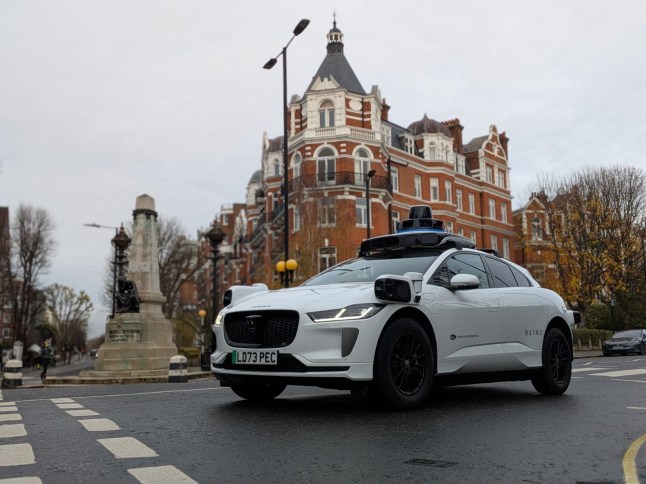
Waymo self-driving cars are being trialled in London, as the firm gets ready to launch a passenger service next year.
The US company posted a photo of one of its Jaguar I-Pace vehicles driving over the famous Abbey Road zebra crossing.
‘The Waymo Driver has landed in London!’ it wrote alongside the picture.
‘Our vehicles are now driving on public roads as we prepare to bring the magic of Waymo to the city in 2026.’
The company says the Waymo driver ‘never gets distracted or tired, providing a consistent level of safety to help reduce human-driven vehicle-related collisions’.
A combination of lindar, cameras and radar, give the fully electric cars their ‘360° sight’, the website says, with AI predicting ‘every move, seeing hundreds of metres away’.
During its London trial, ‘safety drivers’ are behind the wheel, but when the service is fully rolled out next year it’s expected the vehicles will be fully autonomous.
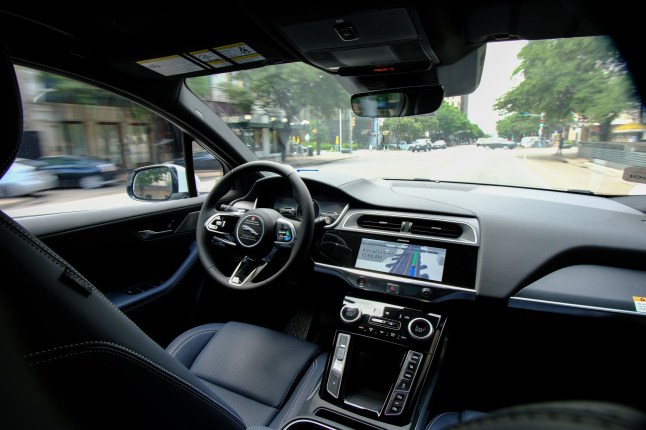
Waymo, set up as a spin-off from Google’s self-driving car programme -launched its driverless taxi service in 2020, and currently operates in San Francisco, Phoenix, Los Angeles and Atlanta.
The company has amassed a fleet of more than 2,000 cars, and, according to its end of year report, has facilitated around 14 million trips in 2025.
In October, one of the first people to trial the service in San Francisco, Suzanne Baum, wrote about the ride for Metro.
Despite initially being ‘terrified’, she describes the trip – during a holiday in 2024 – as one of the ‘most smashing experiences I have ever had’, even going back for more.
She said the journeys felt safe and from speaking to locals one of the few negative reviews were about cars that ‘came alive at night, honking at each other and waking residents around the San Francisco parking lot where they are left when not making trips’.
Latest London news
There have, however, been some reports across the US of Waymo vehicles disobeying traffic rules, such as driving past stopped school buses, and last week, a female Waymo user discovered a man hiding in her vehicle’s boot.
In a video, the woman can be heard asking the man why he’s in the boot, to which he replies he was put there by ‘the people’.
Waymo said that during the London trial, testing, mapping, and ‘safety validation work’ will be carried out in Barking and Dagenham, Brent, Camden, Ealing, Greenwich, Hackney, Hammersmith and Fulham, Haringey, Islington, Kensington and Chelsea, Lambeth, Lewisham, Newham, Redbridge, Southwark, Tower Hamlets, Waltham Forest, Wandsworth, Westminster, and the City of London.
To view this video please enable JavaScript, and consider upgrading to a web
browser that
supports HTML5
video
The company’s expansion to the UK is part of a pilot project approved by the government, and will make the country the first European nation to test driverless taxis.
Uber and the UK tech company Wayve are also planning to trial driverless taxis in London next year.
Some experts have questioned how prepared London is for autonomous taxis.
A study by Nationwide Vehicle Contracts found the capital had a relatively high readiness for becoming a driverless city in terms of technology, such as gigabyte broadband capability (though still lower than many other UK cities).
However, director of the firm, Keith Hawes, fears UK roads are less suitable for driverless vehicles than in the US.
‘The latest Waymo announcement is exciting, but London’s real test will begin when the driverless taxis hit the busy roads,’ he said.
‘At the moment, driverless taxis operating in the US have the benefit of straighter and wider roads.
‘However, the UK’s ringroads, country lanes and sharp bends are likely to pose greater navigational challenges.’

His fears were echoed by Jonny Berry, head of decarbonisation, innovation and strategy at Novuna Vehicle Solutions.
He said: ‘Typically, narrower UK roads, especially in rural or older urban areas leave less margin for autonomous vehicles to manoeuvre, requiring ultra-precise path planning and perception systems.’
Mr Berry added that ‘distinctive road signage, unique lane markings and signal sequences in the UK mean AV systems trained in the US must be recalibrated’.
There have also been fears over major job losses, with Uber CEO Dara Khosrowshahi acknowledging self-driving cars could eventually leave many taxi drivers unemployed.
Speaking at a summit hosted by the “All-In” podcast in September, he said it’s unlikely jobs would be seriously affected in the short term future, but predicted ’10 to 15 years from now, this is going to be a real issue’.
He added he didn’t have a ‘neat answer’ for the problem
The UK government, however, says the self-driving vehicle sector could create 38,000 jobs in other areas and be worth up to £42 billion to the UK economy by 2035.
Roles are expected in communications, AI, cybersecurity, and maintenance, with support centers and charging facilities also creating employment.
Get in touch with our news team by emailing us at webnews@metro.co.uk.
For more stories like this, check our news page.