Northern Lights dazzle skies above UK – will they be visible tonight?
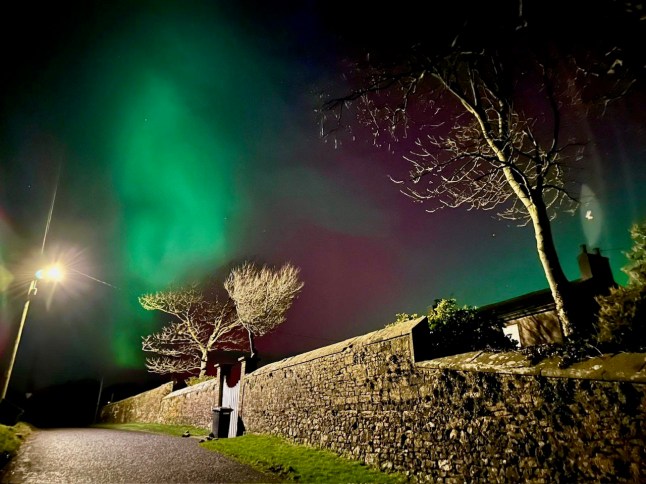
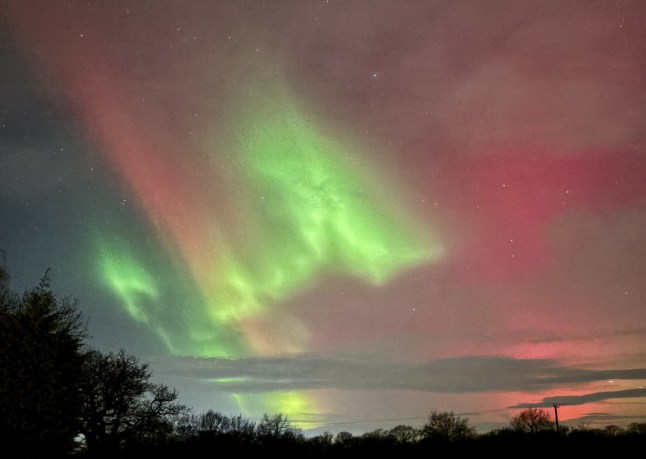
The Northern Lights were on show again across most of the UK last night even spreading as far south as Italy.
The Aurora Borealis, which is usually only visible near the Arctic Circle, could be seen over the country last night, and extended as far south as northern Italy.
It was a result of ‘severe geomagnetic storms’ which are expected to decline today.
To view this video please enable JavaScript, and consider upgrading to a web
browser that
supports HTML5
video
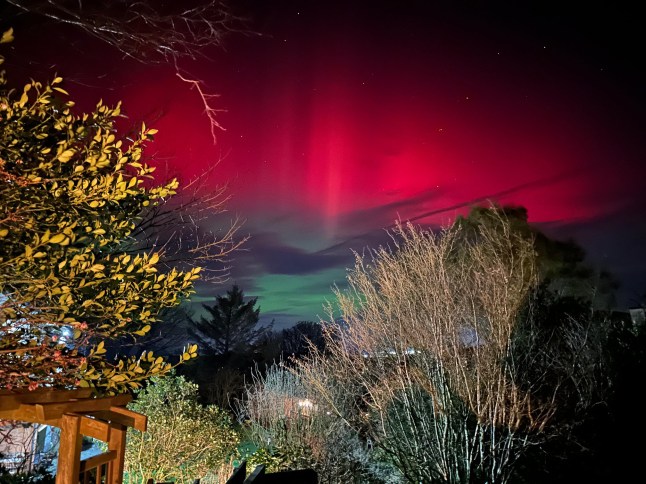
Images show pink and green hues lighting up the night sky over Scotland, Northern Ireland and Wales.
Sign up for all of the latest stories
Start your day informed with Metro’s News Updates newsletter or get Breaking News alerts the moment it happens.
They were also visible in parts of south-west, southern, eastern and northern England.
But it does feel like this is becoming less of a once-in-a-lifetime experience.
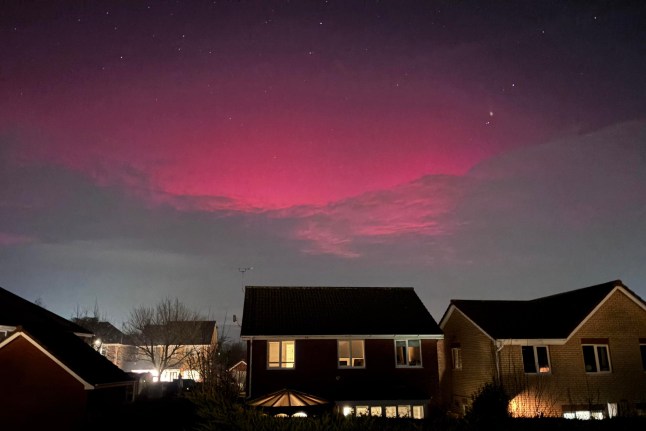
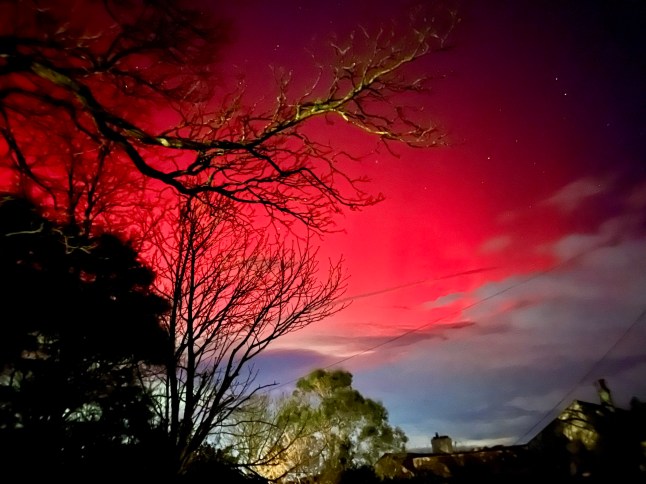
Jo Farrow, a forecaster at Netweather, told Metro that the UK saw ‘fiery’ skies.
‘There were some stunning sights last night, but also plenty of cloud,’ she said.
‘For some, that added to the interesting skies, for others it blocked the view completely.’
Farrow said two weather fronts swept the UK yesterday, smudging the skies with clouds above North West England, Sussex and the Western Isles.
‘The show did continue for hours for those lucky enough to have clear skies, which included Devon,’ she added.
Prefer us to the others? Then tell Google!
As a loyal Metro reader, we want to make sure you never miss our stories when searching for your news. Whether it is the latest politics news explained, live football coverage or a showbiz scoop.
Click here and tick Metro.co.uk to ensure you see stories from us first in Google Search.

Will the Northern Lights be visible tonight?
If you missed them last night, do not fret too much. The Met Office has confirmed the lights ‘may still be visible’ in the north of the country.
This is because a coronal mass ejection – an eruption of plasma and magnetic fields – was flung by the sun towards us on Sunday.
After travelling millions of miles, it splattered the Earth overnight and caused a solar storm and, in turn, the Northern Lights.
Silvia Dalla, a professor of solar physics at the University of Lancashire, told Metro that people are in for a chance of seeing the cosmic fireworks tonight.
‘Finding a good spot to view the Northern Lights can be challenging, and conditions can change quickly,’ Dalla said.
‘Aurora-hunting is a late-night activity, and the optimum time to view the spectacle is usually from 11pm to 12am onwards.
‘To maximise your chances of viewing the aurora, the sky needs to be as clear as possible.
‘Look northwards and try to find a place with dark skies, ideally away from a city where light pollution can interfere with the view.’
Why are we seeing the Northern Lights so often lately?
Usually, you can only see the aurora in Iceland, Scandinavia, Canada and Alaska. But over the last year, a strangely wide swath of the Northern Hemisphere’s sky has been lit up with this brilliant show of colour.
‘The reason we are seeing more northern lights events, the aurora borealis, here in the UK is that we are near a solar maximum,’ explains Jo Farrow, a forecaster for the independent meteorological service, Netweather.
A solar maximum is a period during the sun’s 11-year cycle when the celestial body is especially pumped up.
What causes the Northern Lights?
The Earth has a magnetic field that helps keep all kinds of space junk and gunk away – think of it like an apple wrapped in cling film.
One thing the magnetic field helps repel are particles, including the blobs of plasma spat out by the sun.
As nuclear reactions occur on the sun, it regularly coughs up material from its surface.
This wind travels through space at breakneck speeds up to 45 million mph. If any crash into Earth’s upper atmosphere, they bounce off the planet’s magnetic field and are thrown towards the poles.
Every particle glows different colours. Take oxygen, which has a greenish hue to it, or red-coloured nitrogen.
When all these colourful particles collide with the particles already trapped around Earth’s magnetic field, this causes them to light up.
Get in touch with our news team by emailing us at webnews@metro.co.uk.
For more stories like this, check our news page.